
Artificial lighting: countering the decrease in winter brightness
From autumn onwards, the gradual reduction in daylight hours disrupts our biological rhythms. This decrease in natural brightness can cause tiredness, sleep disturbances, and low spirits. Fortunately, well-planned artificial lighting can offset these effects and help maintain our physiological balance.
The physiological impact of reduced light
Our body naturally produces melatonin when darkness falls, signaling that it is time to prepare for sleep. In winter, this production starts earlier in the day, around 4:30 p.m. instead of 9 p.m. in summer. This change in the body clock explains why we feel sleepier and have less energy.
Light therapy shows that daily exposure to 10,000 lux for 30 minutes can effectively regulate these imbalances. For comparison, a typical indoor space provides only 200 to 500 lux, while a sunny winter day offers 2,000 lux.
Color temperature and well-being: technical keys
Color temperature, measured in Kelvin, plays a crucial role in how we perceive light comfort. In the morning, choose a cool light between 5000 and 6500K to boost alertness and synchronize your internal clock. This bluish light mimics morning sunlight and triggers the production of cortisol.
In the evening, choose a warm temperature of 2700 to 3000K to encourage relaxation and naturally prepare for sleep. This golden light reduces the suppression of melatonin, unlike screens that emit disruptive blue light.
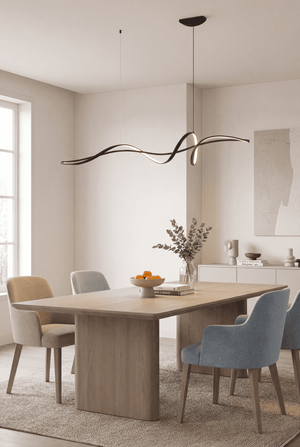
Modern LED lights offer this flexibility thanks to variable white technology or dimmable systems. A hanging light equipped with this technology can adjust its shade according to the time of day.
Optimal lighting according to spaces and activities
Each area of your home needs a specific lighting level to effectively make up for the winter drop in brightness:
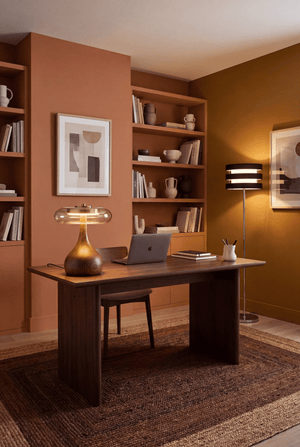
In work areas, aim for at least 500 lux to maintain focus and avoid eye strain. A 15-watt LED desk lamp with a color rendering index above 90 ensures optimal color accuracy. Place your lamp 40-60 cm from your work surface to avoid casting shadows.
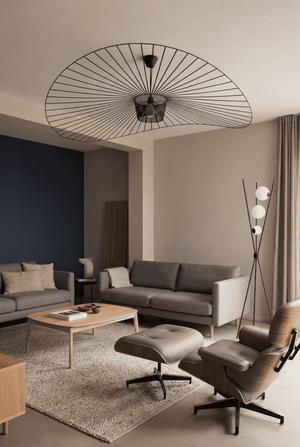
For relaxation areas like the living room, 150 to 300 lux is enough depending on the activity. A floor lamp with a dimmer lets you adjust the brightness between reading (300 lux) and relaxing (100 lux). Indirect lighting reflected off walls or ceilings prevents glare.
Layered lighting strategies
The layered approach combines three types of lighting for optimal light compensation:
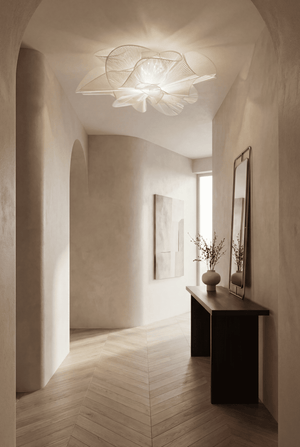
General lighting provides even basic brightness. A ceiling light LED of 3000 lumens efficiently covers a 20m² room. Choose a wide beam angle (120°) to avoid shadowy areas.
Task lighting meets specific needs: reading, cooking, working. Recessed spotlights or directed wall lights provide focused light where you need it.
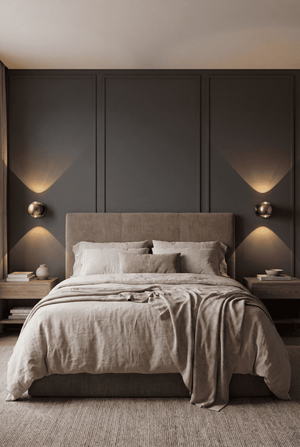
Atmosphere lighting creates the desired mood. Wall lights with indirect lighting or LED string lights produce a soft, warm glow in the evening.
Advanced technological solutions
Circadian lighting systems automate this management by automatically adjusting color temperature and brightness according to the time. These smart lights can simulate a gradual sunrise in the morning (gradually shifting from 2200K to 5000K over 30 minutes) and a sunset in the evening.
Built-in ambient light sensors adjust artificial lighting based on available natural light. When clouds darken your home at 3 p.m., the lighting automatically brightens to maintain the optimal level.
Human Centric Lighting technology goes further by taking your personal habits and body clock type (early riser or night owl) into account to personalize light cycles.
Choosing efficient light sources
High-quality LEDs are the best choice to make up for the winter drop. Their light efficiency of 100 to 200 lumens per watt far surpasses traditional bulbs. A 10-watt LED is equivalent to a 60-watt incandescent bulb while using 83% less energy.
Check the Color Rendering Index (CRI): a CRI above 90 ensures natural color perception, which is essential for visual comfort. Low-end LEDs (CRI < 80) can create an unpleasant artificial atmosphere.
The lifespan of quality LEDs reaches 25,000 to 50,000 hours, or 15 to 30 years of normal use. This longevity makes up for the higher initial cost and reduces environmental impact.
Optimal positioning and installation
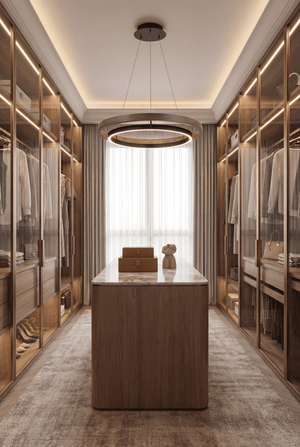
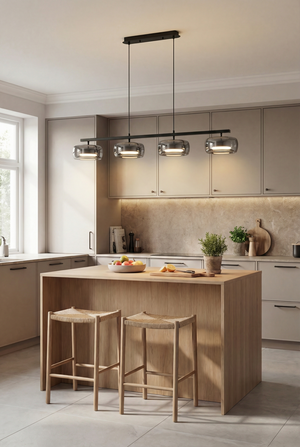
Installation height directly affects the effectiveness of your compensating lighting. For hanging lights above a table, keep a distance of 70 to 80 cm between the light and the surface. This height prevents glare while ensuring even lighting.
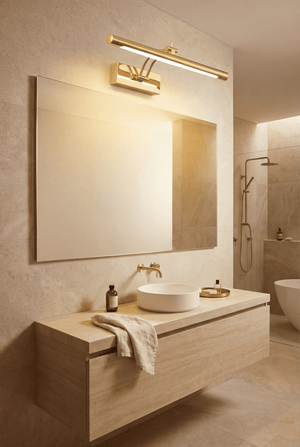
Wall lights are ideally installed between 1.7 m and 1.8 m from the floor for comfortable face-level lighting. In stairways, space the light points no more than 1.5 m apart to ensure safety.
Beam direction deserves attention: a 30° angle is suitable for accent lighting, 60° for general lighting, and 120° for diffuse atmosphere lighting.
Energy and environmental impact
Making up for the drop in natural brightness means using more artificial lighting. Efficient LEDs limit this overuse: an average household saves €200 a year on electricity by replacing traditional bulbs with LEDs.
Dimmers further optimize consumption by adjusting power to actual needs. Dimming an LED to 50% of its capacity reduces consumption by 40 to 45%.
Choose eco-designed lights made with recyclable materials and repairable parts. This sustainable approach extends product life and reduces the carbon footprint.
What brightness is needed to make up for the lack of winter sunlight?
To effectively make up for the winter drop in brightness, aim for 500 to 1000 lux in main living areas. Daily exposure to 2500 lux for 2 hours or 10,000 lux for 30 minutes can regulate your body clock disrupted by the lack of natural light.
What color temperature should you set your LEDs to in winter?
Use 5000 to 6500K (cool white) in the morning and during the day to boost alertness, then switch to 2700-3000K (warm white) from 6 p.m. onwards to naturally prepare for sleep. This change in color temperature mimics the sun’s natural cycle and maintains your hormonal balance.
How much energy does reinforced winter lighting use?
Reinforced LED lighting to make up for winter uses 15 to 25 watts per 15m² room, or about €0.15 per day for 6 hours of use. This extra cost of €15 to €20 per month is largely offset by the benefits to well-being and productivity.
Can you automatically program your circadian lighting?
Smart lighting systems allow automatic programming that reproduces the sun’s natural cycle. These solutions adjust color temperature and brightness according to the time, with gradual transitions over 15 to 30 minutes to respect natural physiological adaptation.