
Stair lighting: complete guide to make your steps safer and more stylish
Staircase lighting is a major issue in interior design, combining safety and aesthetics. A poorly lit staircase is a source of danger, especially at night or in low light. Installing a suitable lighting system turns this circulation space into a true decorative feature while ensuring optimal safety.
Lighting standards recommend a level of 150 to 200 lumens per square meter for circulation areas such as staircases. This intensity provides clear visibility of treads and risers, significantly reducing the risk of falls. Evenness of lighting is also crucial to avoid shadowy areas that could conceal the dimensions of the steps.
Types of staircase lighting: technical and aesthetic solutions
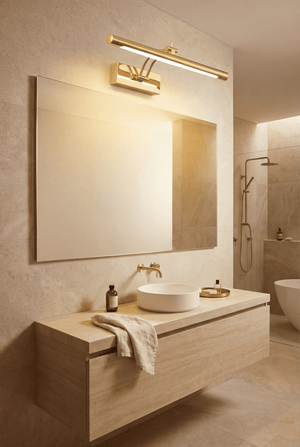
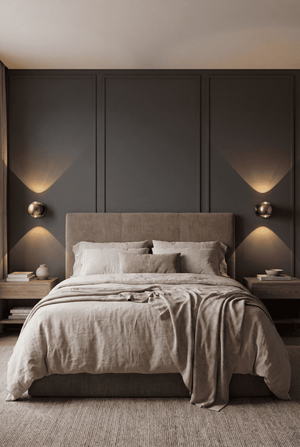
Wall sconces are the most common solution for staircase lighting. Positioned at a height of 1.70 m to 1.80 m from the floor, they diffuse a soft, even light along the ascent. Indirect-light models create ambient lighting that is particularly well suited to stairways, avoiding direct glare.
Integrated LED guidance lighting represents a modern, discreet approach. These systems are recessed directly into the treads, risers, or adjacent walls, creating a continuous light path. LED technology offers an exceptional lifespan of 25,000 to 50,000 hours, significantly reducing maintenance operations in these hard-to-access areas.
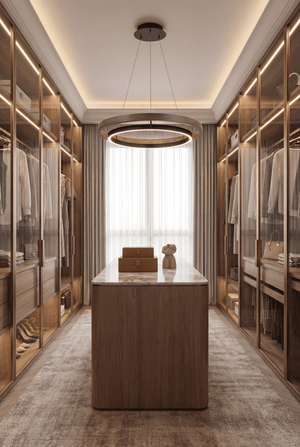
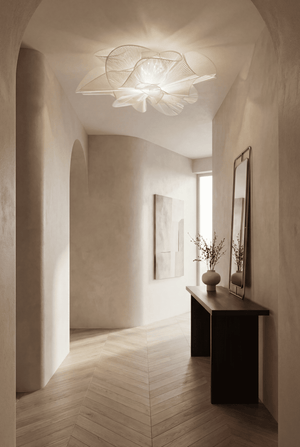
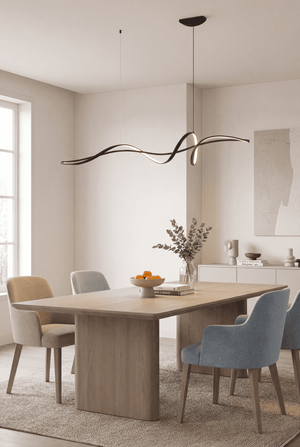
Designer pendant lights are particularly suitable for staircases in large spaces. Hung at a minimum of 2.10 m from the floor, they create general lighting while serving as a central decorative feature. Choosing a model with a dimmer lets you adjust light intensity according to needs and the time of day.
Automatic lighting and motion detection
Integrating motion detectors transforms how the staircase is used, especially appreciated during nighttime trips. These systems activate automatically when someone passes by, ensuring instant lighting without having to operate a switch. The adjustable delay, generally between 30 seconds and 5 minutes, optimizes energy consumption.
Dusk sensors ideally complement motion detectors by activating the system only when natural light becomes insufficient. This combination ensures smart operation, avoiding unnecessary daytime activation while guaranteeing lighting availability when needed.
Choosing light fixtures according to staircase configuration
Straight staircases are perfectly suited to linear lighting with wall sconces spaced 1.5 to 2 meters apart. This distribution ensures even light coverage without shadowy areas. Using LEDs with a 60-degree beam angle optimizes light distribution across the full width of the treads.
Spiral or curved staircases require a specific approach. Central pendant lighting often becomes the preferred solution, supplemented by LED marking under the steps. This combination makes it possible to follow the curve of the staircase while maintaining optimal visibility at each landing.
For open staircases without risers, integrated step marking within the treads or on the underside becomes essential. Aluminum LED profiles with an opaque diffuser create a continuous line of light, perfectly highlighting a contemporary design while ensuring safety.
Suitable materials and finishes
Choosing durable materials is essential in a high-traffic environment. Anodized aluminum or stainless-steel light fixtures ensure optimal durability against mechanical stress. Brushed or satin finishes effectively hide everyday wear marks.
IP protection ratings deserve special attention depending on the environment. An IP20 rating is sufficient for a standard indoor staircase, while IP44 becomes necessary in damp areas or for staircases leading to basements. This protection ensures the longevity of the integrated electronic equipment.
Color temperature and color rendering
The color temperature has a significant influence on the staircase’s ambiance. A warm white of 2700K to 3000K creates a welcoming atmosphere, particularly suited to residential staircases. This tone promotes relaxation and blends naturally with the surrounding home lighting.
Neutral 4000K white is better suited to contemporary spaces and staircases in professional environments. This temperature offers an excellent balance between visual comfort and luminous efficiency, enabling accurate perception of textures and materials.
The color rendering index (CRI) must reach at least 80 to ensure natural color perception. A CRI above 90 is recommended when the staircase highlights premium materials such as wood, stone, or special metallic finishes.
Power and energy efficiency
Calculating the required power depends on the staircase dimensions and the desired effect. For functional lighting, allow 10 to 15 watts per linear meter of staircase. Decorative lighting may require 20 to 30 watts per linear meter to create pronounced visual effects.
LED SMD technology offers the best balance between energy efficiency and light quality. With an efficacy of 100 to 150 lumens per watt, these sources significantly reduce consumption compared with traditional solutions while offering wide dimming possibilities.
Installation and electrical connection
The electrical connection of stair lighting requires careful planning. A 230V supply requires compliance with NF C 15-100 standards, which are particularly strict for circulation areas. Using cables with an appropriate cross-section, generally 1.5 mm² for lighting circuits, ensures safety and the long-term reliability of the installation.
LED transformers must be sized with a 20% margin over the total installed power. This precaution prevents overloads and ensures stable operation over time. Placing the transformer in a technical room makes maintenance easier and reduces any potential noise nuisance.
For installations with automatic detection, control wiring connects the various detectors to the central control system. This architecture enables coordinated management of the entire stair lighting system, with the possibility of programmable lighting scenes according to times and uses.
Compatibility with home automation
Integration into a home automation system turns stair lighting into an intelligent element of the home. KNX or Z-Wave protocols enable centralized control with time scheduling, automatic intensity adjustment, and integration into global lighting scenes.
LED-compatible dimmers of the trailing-edge or leading-edge type, depending on the power sources used, provide fine modulation of light intensity. This feature makes it possible to adapt the lighting to different uses: reduced intensity for nighttime movement, full power for cleaning or maintenance.
Specialized stair wall light solutions
Stair wall lights come in many variants suited to specific constraints. Recessed wall models create seamless integration, particularly well suited to new builds or full renovations. Their installation requires allowing space in the masonry during construction.
Surface-mounted wall lights are suitable for renovation installations where running recessed cables is complex. Models with an integrated cable cover allow a neat surface connection, effectively concealing conduits. Discover our selection of wall lights specially designed for architectural lighting.
For narrow staircases, asymmetrical wall lights direct the light output only toward the steps, preventing glare for users. This design optimizes lighting efficiency while preserving visual comfort when going up or down.
LED step marker lighting
LED step marker lighting is the most discreet and effective solution for making a staircase safer. 1 to 2 meter aluminum profiles are recessed into the treads, risers, or baseboards, creating continuous illuminated guidance. Side diffusion avoids direct glare while clearly outlining each step.
Flexible LED strips adapt to curved staircases or unusual shapes. With a width of 8 to 12 mm and a thickness of 2 to 3 mm, they fit into the thinnest grooves. The ability to cut every 5 cm allows precise adjustment to each staircase configuration.
Installing passage sensors on each step creates progressive lighting that follows the ascent or descent. This striking approach is particularly suitable for showcase staircases or high-end installations where the visual effect complements the safety function.
Maintenance and durability of installations
Preventive maintenance for stair lighting generally comes down to dusting the fixtures and checking that the sensors are working properly. LED technology drastically reduces replacement work, with a lifespan often exceeding 20 years under normal household use.
Modular systems greatly make servicing easier. Waterproof connectors allow a segment of LED strip to be replaced without removing the entire installation. This modular approach reduces maintenance costs and limits disruption during service work.
Choosing well-known brands guarantees the long-term availability of spare parts. Manufacturers specializing in architectural lighting offer long-lasting ranges with a commitment to component availability for at least 10 to 15 years.
Energy optimization
Energy optimization for stair lighting relies on the smart use of automation. Scheduling time slots reduces consumption by limiting operation to periods of actual use. A residential staircase typically consumes 50 to 80 kWh per year with an optimized system.
Automatic dimmers adjust brightness based on ambient light detected by photoelectric cells. This regulation maintains a constant level of safety while optimizing energy consumption, especially useful for staircases that benefit from natural daylight.
Modern stair lighting perfectly combines safety, aesthetics, and energy efficiency. LED solutions paired with smart automation transform these circulation areas into true architectural features. Explore our designer pendant lights to create spectacular effects in your stairwells.
Frequently asked questions about stair lighting
What LED power should you plan to light 15 staircase steps?
For 15 standard steps (18 cm rise, 28 cm tread depth), allow 150 to 200 lumens per step, i.e., 2250 to 3000 lumens in total. With LEDs at 100 lm/W, a power of 25 to 30 watts is enough for optimal safe lighting.
At what height should you install wall sconces along a staircase?
Install wall sconces between 1.70 m and 1.80 m from the floor, spaced no more than 1.5 to 2 meters apart. This height avoids glare while ensuring even light distribution across all treads and risers.
Which IP protection rating should you choose for indoor stair lighting?
An IP20 rating is suitable for a standard indoor staircase. Choose at least IP44 in damp areas (cellar, laundry room) or for a covered outdoor staircase. An IP65 rating becomes necessary for outdoor installations exposed to the elements.
How do you calculate the number of motion detectors needed?
A detector generally covers 6 to 8 linear meters of staircase depending on the detection angle. For a 15-step staircase (about 4.5 meters long), a single detector is enough. Beyond 8 meters, install an additional detector every 6 meters.