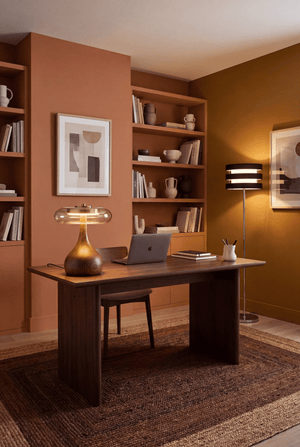
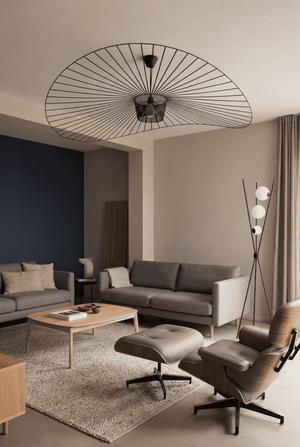

Direct and indirect lighting: mastering the art of light in your home interior
The art of lighting relies on the subtle mastery of two fundamental techniques: direct and indirect lighting. This lighting duality allows you to shape the ambiance of your spaces with masterful precision. Understanding these principles opens the door to sophisticated, functional lighting design.
Each type of lighting meets specific needs and produces distinct visual effects in your interior décor. Direct lighting prioritizes efficiency and precision, while indirect lighting focuses on softness and atmosphere.
Understanding direct lighting: definition and characteristics
Direct lighting projects direct-indirect light without any intermediary between the light source and the surface to be illuminated. This approach concentrates light intensity on a specific area, creating strong contrast between lit areas and shadows.
The technical characteristics of direct lighting include a narrow beam angle of 30 to 60 degrees, particularly suitable for tasks requiring high brightness. LED spotlights with a GU10 base typically provide 500 to 800 lumens for effective direct lighting.
This technique is perfectly suited to work surfaces that require 250 to 300 lm/m² according to professional lighting standards. The CRI must reach at least 80 to ensure accurate color rendering during precise activities.
The benefits of direct lighting include optimized energy consumption and simpler installation. However, it can create harsh shadows and visual fatigue when used for extended periods without supplementary lighting.
Indirect lighting: principles and benefits
Indirect lighting uses a reflective surface as an intermediary between the light source and the space to be lit. This technique directs light toward a wall, ceiling, or reflector panel, which then diffuses a soft, even glow.
The recommended color temperature for indirect lighting ranges from 2700 to 3000 Kelvin in warm white, creating a cozy and relaxing atmosphere. SMD or COB LEDs provide uniform diffusion that is particularly well suited to this application.
Indirect wall lighting requires a minimum distance of 20 cm between the light source and the reflective surface to avoid hot spots. The optimal beam angle is between 120 and 180 degrees to maximize the reflection effect.
This technique significantly reduces glare and creates a soothing atmosphere in relaxation areas. Indirect lighting is ideal for living rooms with an intensity of 100 to 150 lm/m² and for bedrooms with 50 to 100 lm/m².
Uplighters: masters of indirect lighting
Uplighters are the perfect embodiment of vertical indirect lighting. These fixtures direct their beam toward the ceiling, which acts as a huge reflector that diffuses light throughout the space.
An effective uplighter should be positioned at a minimum of 2.10 meters from the floor to avoid direct glare. The recommended power ranges from 15 to 25 watts LED for a 20 m² room, i.e., about 750 to 1250 lumens diffused.
Dimmable models or compatible dimmable ones allow you to adjust brightness depending on the time of day. Check compatibility with trailing-edge or leading-edge dimmers depending on your electrical setup.
Techniques for applying direct lighting
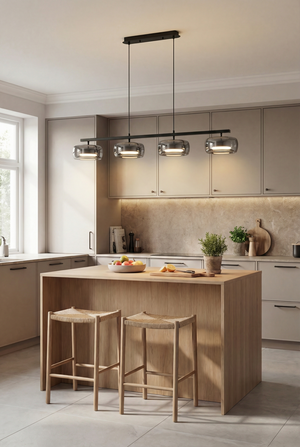
Direct lighting is ideal for functional areas that require high light intensity. Kitchens benefit from 7 to 12-watt LED directional spotlights positioned 70 cm above the worktops.
For reading areas, choose directional lamps with a CRI above 90 to preserve visual comfort. Table lamps with an adjustable shade offer optimal flexibility to direct the light to suit your needs.
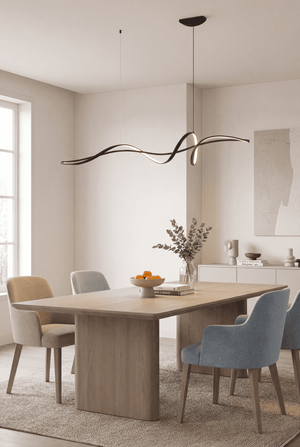
Directional pendant lights are an elegant solution for table lighting. Hung 70 to 80 cm above the tabletop, they create an intimate and functional circle of light.
Direct lighting using recessed spotlights requires a balanced distribution to avoid shadowy areas. Allow one spotlight every 1.5 to 2 meters, with a 60-degree beam angle for even coverage.
Optimize direct lighting in each room
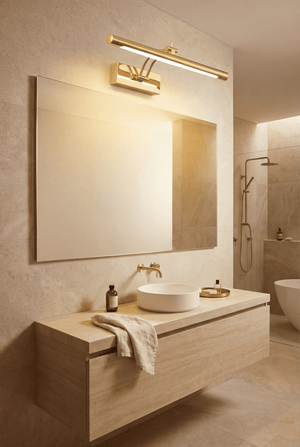
In the bathroom, direct lighting must comply with IP44 standards in zone 2 around the water point. Side mirror wall lights provide optimal facial lighting without creating unattractive cast shadows.
An office requires direct lighting of 300 to 500 lm/m² to prevent visual fatigue. Position the light source perpendicular to the computer screen to minimize distracting reflections.
Indirect lighting methods for each space
Indirect lighting transforms the atmosphere of your living spaces by creating an enveloping, warm brightness. This technique relies on reflected light to spread a soft, even glow.
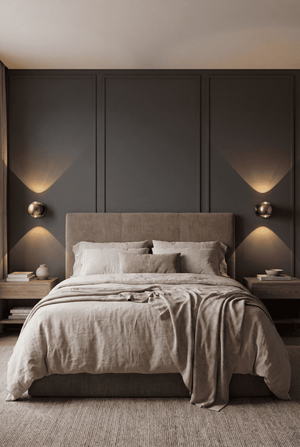
Wall sconces with indirect lighting project their light upward and downward, creating wall-wash effects. This technique visually enlarges the space and adds an architectural dimension.
For the living room, combine several indirect lighting sources: uplighter floor lamps, LED strips concealed behind cornices, and table lamps with opaque shades. This layered lighting creates a sophisticated, adjustable atmosphere.
Torchiere floor lamps are the ideal solution for main indirect lighting. Placed in the corners of the room, they diffuse ambient light of 100 to 200 lumens per square meter.
Creating decorative effects with indirect lighting
Indirect lighting helps bring out wall textures and architectural elements. LED strips installed behind headboards create a romantic halo of light with a consumption of 5 to 10 watts per linear meter.
Lit niches showcase your decorative objects thanks to lateral indirect lighting. Use LED light bars with a CRI of at least 90 to preserve the authenticity of the colors in your artwork.
Combining direct and indirect lighting effectively
Mastering lighting relies on the art of mixing direct and indirect sources. This multi-layered approach creates a visual hierarchy and meets functional and aesthetic needs at the same time.
The principle of three lighting levels combines indirect general lighting, direct accent lighting, and targeted task lighting. This strategy ensures optimal visual comfort and flexible use.
In a modern kitchen, pair indirect general lighting from 2700K LED ceiling lights with direct lighting for worktops using 4000K LED light bars. This combination provides 150 lm/m² for ambience and 300 lm/m² for task lighting.
Mixed-light chandeliers combine these two approaches in a single fixture. They diffuse general light upward and direct light downward, optimizing luminous efficiency.
Adapt lighting to different times of day
Time-based lighting management uses variable sources to follow the natural circadian rhythm. In the morning, prioritize energizing direct lighting with a temperature of 4000 to 5000 Kelvin.
In the evening, switch to warm indirect lighting of 2700 Kelvin maximum. Electronic dimmers enable this gradual transition by adjusting intensity from 10 to 100% depending on your needs.
Choose the right fixtures for each technique
The choice of fixture determines the effectiveness of your lighting strategy. Optical characteristics, color temperature, and beam angle directly influence the final result of your installation.
For direct lighting, prioritize precise-optic sources: reflector spotlights, directional floodlights, or adjustable desk lamps. These fixtures concentrate the luminous flux with an efficiency of 80 to 120 lm/W.
Indirect lighting requires wide-distribution sources: up-and-down wall lights, torchiere floor lamps, or LED strips with an aluminum profile. The goal is to maximize the surface area lit indirectly.
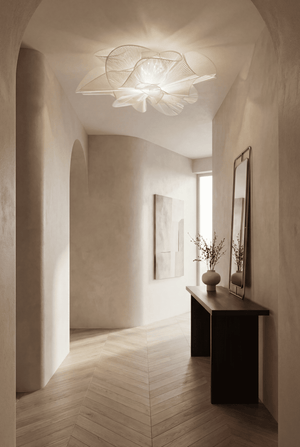
Indirect-light ceiling lights cast their light toward the ceiling, which redistributes the light evenly throughout the room. This solution is ideal for spaces with light-colored, reflective ceilings.
Technical selection criteria
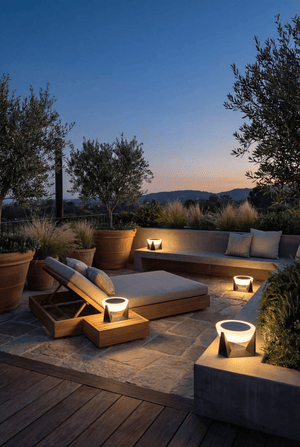
The IP protection rating determines how you can use your fixtures depending on the installation zones. IP20 is sufficient for dry areas, IP44 is required in wet areas, and IP65 for outdoor applications.
Dimmer compatibility determines your ability to adjust light intensity. Check for the word "dimmable" and the supported technology: leading edge, trailing edge, or 0-10V electronic dimmer.
Avoid common lighting mistakes
The main mistake is to neglect the balance between direct and indirect lighting. Exclusively direct lighting creates a cold, tiring atmosphere, while exclusively indirect lighting lacks dynamism and functionality.
Incorrect positioning of light sources creates distracting shadows or glare. Follow the recommended heights: at least 2.10 m for floor lamps, 1.70 m to 1.80 m for wall sconces.
An unsuitable color temperature disrupts the visual harmony of your spaces. Keep consistency between 2700 and 3000 Kelvin for relaxation areas, and 4000 Kelvin for workspaces.
Installing fixtures without dimming capability considerably limits your flexibility of use. Always choose dimmable solutions to adapt the lighting to each situation.
Optimizing energy consumption
Indirect lighting generally uses 20 to 30% more energy than direct lighting due to reflection losses. Offset this difference by choosing high-efficiency LEDs of at least 100 to 120 lm/W.
Presence sensors and time switches significantly reduce consumption in passage areas. These automation solutions can save 30 to 50% on the energy bill.
Frequently asked questions about direct and indirect lighting
What LED wattage should you plan for indirect lighting in a 25 m² living room?
For a 25 m² living room, aim for 100 to 150 lm/m², i.e., 2,500 to 3,750 lumens total. With indirect LED lighting, this corresponds to 25 to 35 watts spread across several sources: a 20W torchiere floor lamp, indirect wall sconces at 2x8W. Choose 2700K for a warm atmosphere.
At what height should you install an indirect wall sconce?
Install indirect wall sconces between 1.70 m and 1.80 m from the floor to avoid glare. For indirect lighting toward the ceiling, keep at least 30 cm between the fixture and the ceiling. In a hallway, lower to 1.60 m to optimize light distribution.
How can you avoid glare with direct desk lighting?
Position the light source perpendicular to the screen and use lighting of at least 300 lm/m² with CRI ≥ 80. Supplement with indirect ambient lighting at 100 lm/m² to reduce contrast. Avoid direct sources within a 40° field of view.
Can you mix different color temperatures between direct and indirect lighting?
Limit the difference to a maximum of 1000 Kelvin between sources to maintain visual harmony. For example: 2700K indirect ambient + 3000K direct task lighting, or 3000K indirect + 4000K direct work lighting. A larger gap creates a sense of color imbalance.