
Cozy lighting: create a warm home in winter
When the days get shorter and the sun becomes scarce, your home becomes your main refuge. Well-designed cocooning lighting can radically transform the atmosphere of your house, creating that feeling of well-being and warmth so sought after during the cold season.
The art of creating a cozy light fixture is not just about installing a few bulbs. It’s a true orchestration of light that plays with color temperatures, intensities, and the multiplication of sources to envelop your space in a gentle glow.
The fundamentals of warm lighting for winter
Warm winter lighting is based on precise technical principles. Color temperature is the first parameter to master: always opt for warm white between 2700K and 3000K. This range ensures a golden light that naturally evokes the warmth of a fireplace or candles.
Light intensity also deserves your attention. For a cocooning living room, aim for 100 to 150 lumens per square meter, about 30% less than usual functional lighting. This intentional reduction in intensity promotes relaxation and automatically creates a more intimate atmosphere.
Variability represents the third fundamental pillar. Systematically integrate dimmers into your setup. This feature allows you to adjust the lighting according to the time of day and your mood, shifting from functional lighting during the day to a cocooning atmosphere in the evening.
Strategies for multiplying light sources
A common mistake is relying on a single central light source. Successful cocooning lighting, on the contrary, requires the strategic multiplication of sources to create different mood zones within the same room.
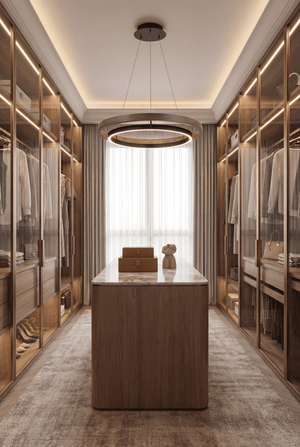
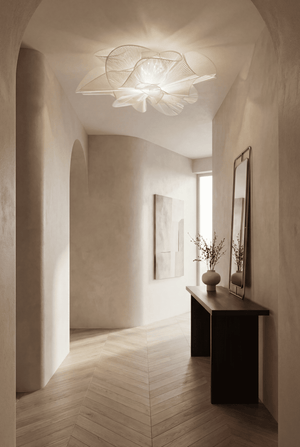
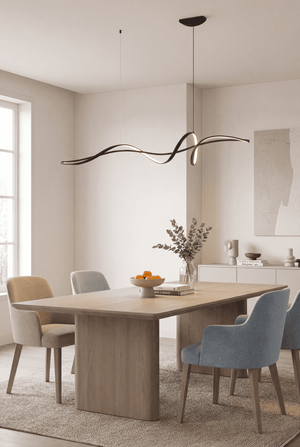
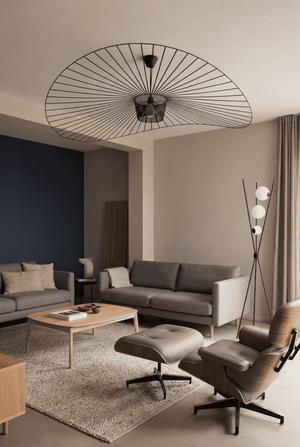
Start by installing a designer pendant light above your coffee table or reading nook. This main source, equipped with a fabric or diffusing shade, distributes a soft living room light without glare.
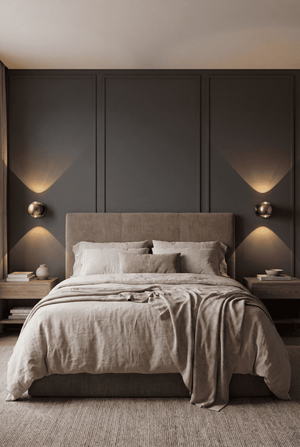
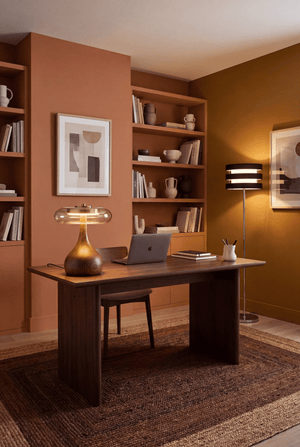
Then complete with strategically placed accent lamps: a table lamp on your entryway console, a floor lamp next to your sofa, a wall sconce to highlight a painting or create indirect lighting. This layered approach generates a luminous relief that literally envelops the space.
Optimal positioning of secondary light sources
The placement of your decorative lamps directly influences the effectiveness of your ambient lighting. Follow the height rule: position your table lamps at eye level when seated, which is about 60 centimeters from the floor to the bottom of the lampshade.
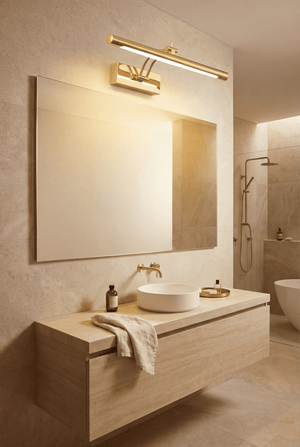
For wall sconces, the ideal height is between 1.70 and 1.80 meters from the floor. This position avoids direct glare while effectively diffusing light throughout the room. Floor lamps are best placed in corners or against walls, creating indirect lighting that reflects off light surfaces.
Materials and textures to filter light
The choice of materials is a crucial aspect often overlooked in cocooning lighting. Each material interacts differently with light, directly influencing the overall atmosphere of your interior.
Natural fabric remains essential for lampshades. Linen, cotton, or hemp naturally filter the light, creating a warm and even diffusion. These materials absorb unwanted reflections and naturally soften the light intensity.
Rattan and bamboo add an extra dimension by casting subtle patterns on the walls and ceiling. These natural materials enhance the cocooning feel while adding interesting visual texture to your lighting.
Glass and ceramic for light modulation
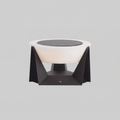
Frosted glass offers an elegant alternative to fabric lampshades. It diffuses light evenly without creating pronounced shadow areas, making it ideal for general room lighting. Matte ceramic produces a similar effect while adding extra warmth thanks to its natural texture.
Always avoid untreated shiny or metallic surfaces that create harsh reflections incompatible with the desired ambiance. If you choose metal, opt for matte or patinated finishes that retain a warm appearance.
Harmonious integration with natural light
Even on gray days, residual natural light is still present and deserves to be optimized. Your warm lighting should work with this variable natural brightness rather than against it.
Maximize natural light by clearing your windows of any unnecessary obstacles. Replace opaque curtains with light sheers that filter light without blocking it. This simple change can increase your room’s natural brightness by 30 to 40%.
Strategic use of mirrors amplifies this effect. Place a large mirror opposite or perpendicular to a window to reflect and redistribute natural light into less-lit areas. This age-old technique remains particularly effective in contemporary interiors.
Gradual transition to artificial lighting
The key to successful ambient lighting lies in the seamless transition between natural and artificial light. Program your designer floor lamps to turn on gradually from 4:30 p.m. in winter, naturally compensating for the decrease in outdoor brightness.
This gradual approach avoids the harsh contrast between day and night that can negatively affect your mood. Your brain naturally adapts to this gentle transition, maintaining your well-being even on the darkest days.
Specific zones and their lighting needs
Each area of your home requires a specific approach to create the ideal cozy atmosphere. The living room, the central space for relaxation, deserves special attention due to its multiple functions.
Cozy lighting for the living room
In the living room, combine three types of lighting: general, functional, and decorative. General lighting can be provided by a modern ceiling light equipped with a dimmer, emitting between 800 and 1200 lumens depending on the size of the room.
Functional lighting targets specific activities: reading, knitting, or working on a laptop. A reading lamp should provide 300 to 500 lumens directly onto the activity area, without causing glare from reflections.
Decorative lighting, finally, sets the mood. LED string lights in warm white 2700K, LED candles, or small ambient lamps contribute to this cozy atmosphere without significantly adding to functional lighting.
Kitchen and cozy lighting
The kitchen presents particular challenges as it combines high functional needs and the desire for a warm atmosphere. On the worktop, maintain lighting of 300 to 500 lumens per square meter for food safety.
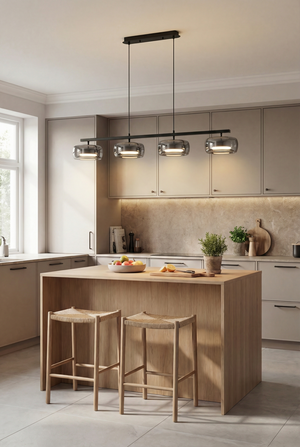
However, add an independent ambient lighting circuit for convivial moments. Designer wall sconces installed above high elements diffuse indirect light that transforms your kitchen into a cozy space after meals.
Modern technologies serving cocooning
Contemporary LED technologies offer unprecedented possibilities to personalize your cozy lighting. LED bulbs with variable color temperature allow you to automatically adjust the hue according to the time of day.
Program your lights to start at 3000K in the morning, gradually drop to 2700K in the evening, then reach 2200K before bedtime. This natural variation supports your circadian rhythm and enhances your sense of well-being.
Smart control systems
Modern home automation systems allow you to create pre-programmed lighting scenarios. The "cocooning" scenario can combine the activation of several sources at reduced intensity, instantly creating the desired atmosphere with a simple voice or touch command.
These technologies perfectly respect the principles of cocooning by eliminating technical actions that break the atmosphere. Your lighting naturally adapts to your needs without conscious intervention on your part.
Energy savings and cozy lighting
Contrary to popular belief, well-designed ambient lighting can reduce your energy consumption. By multiplying low-power sources instead of using intense general lighting, you naturally optimize your consumption.
An 8-watt LED lamp in warm white 2700K consumes 75% less than an equivalent incandescent bulb while delivering the same warm light feeling. Over a full winter season, this difference represents substantial savings.
The exceptional lifespan of LEDs, between 25,000 and 50,000 hours, quickly offsets the initial investment in quality fixtures. This longevity avoids frequent replacements that disrupt the harmony of your cozy lighting.
Maintenance and continuous optimization
Effective cozy lighting requires regular maintenance to preserve its properties. Dust your lampshades every month: dust can reduce the light efficiency by 20 to 30% of a fabric fixture.
Periodically check the color temperature of your LED bulbs. Some cheap models shift towards cool white as they age, compromising the warm atmosphere you want. Investing in quality LEDs ensures color stability throughout their lifespan.
Adapt your lighting to seasonal changes: gradually reduce intensities as the days get shorter, then increase them when spring returns. This adjustment naturally matches the variations in your need for artificial light.
What color temperature should you choose for cozy lighting?
To create an optimal cozy atmosphere, favor warm white between 2700K and 3000K. This temperature range reproduces the warmth of candles and wood fires, naturally creating a soothing and warm atmosphere.
How many light sources are needed in a cozy living room?
An effective cozy living room requires 4 to 6 different light sources: general lighting (ceiling light or pendant), 2 to 3 accent lamps (floor lamp, table lamp), and 1 to 2 decorative lights (wall lights, LED string lights).
What light intensity for a cozy atmosphere?
Aim for 100 to 150 lumens per square meter for general lighting in a cozy living room, which is about 30% less than standard functional lighting. Supplement with accent sources of 200 to 400 lumens depending on the area.
Are LEDs suitable for cozy lighting?
Modern LEDs are perfectly suited for cozy lighting. Choose dimmable models of 2700K with a CRI above 80 to ensure natural color rendering and a warm atmosphere comparable to traditional bulbs.